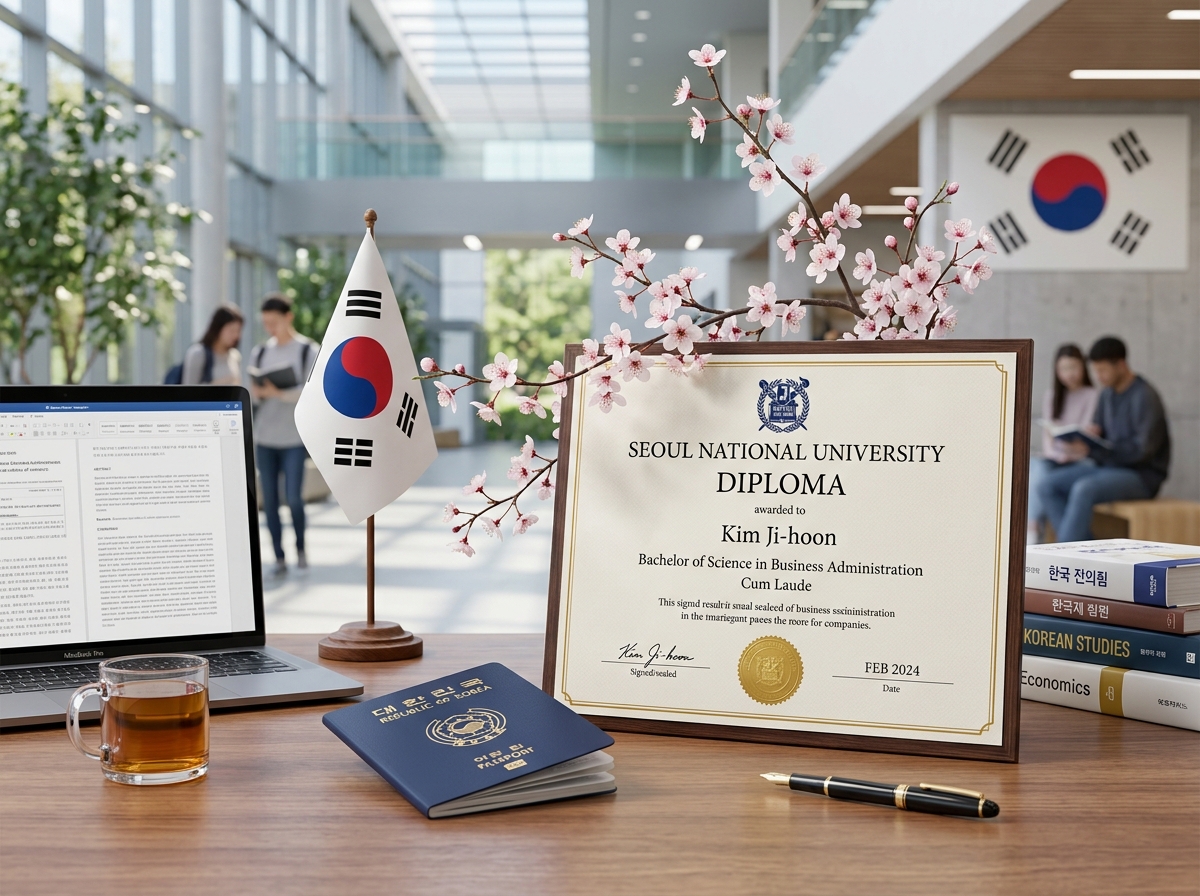
Aspiring to study in South Korea in 2026? The Global Korea Scholarship (GKS), formerly known as KGSP, is one of the most prestigious, fully funded scholarship programs in the world. Funded by the South Korean Ministry of Education, this merit-based initiative is designed to attract international talents and foster global educational exchange.
For the 2026 cycles, the scholarship allows students from around the globe to pursue undergraduate or graduate studies at over 80 participating South Korean universities. To be eligible, applicants must maintain an academic score of 80% (or equivalent GPA) or rank in the top 20% of their class. Age limits are strictly enforced: under 25 years for undergraduates and under 40 years for master's and doctoral candidates.
Here is an all-inclusive 2026 guide explaining the GKS benefits, application tracks, and the mandatory document legalization process.
Financial & Living Benefits of GKS in 2026
GKS scholars receive comprehensive financial support, covering virtually all expenses associated with studying and living in South Korea:
- Tuition Fee Coverage: Full exemption from matriculation and semester fees.
- Airfare: Direct round-trip economy flights between your home country and South Korea.
- Monthly Stipends: Monthly living allowance to cover food, housing, and basic utilities.
- Language Training: Full sponsorship for a mandatory 1-year intensive Korean language program.
- Medical Cover: Official national health insurance premiums are fully paid.
- Additional Allowances: Relocation grant, thesis printing support, and completion grants.
The Two Application Tracks
Candidates can apply through one of two independent application pathways, but not both simultaneously:
- The Embassy Track: Applicants submit their dossier to the Korean Embassy in New Delhi. This track offers more university choices but has a multi-layered screening process.
- The University Track: Applicants apply directly to the admissions office of their chosen Korean university. This track is faster but limits selection to a single institution.
Mandatory Document Legalization & Apostille Rules
Because South Korea is a member of the Hague Apostille Convention, all Indian-issued certificates submitted for the GKS application must be legally apostilled by the Ministry of External Affairs (MEA). Documents submitted without a valid apostille stamp will be rejected immediately during the first-round screening.
The following documents require notarization, state verification (HRD or SDM), and final MEA Apostille:
- Original academic degrees, diplomas, or graduation certificates.
- Consolidated marksheets and official transcripts.
- Proof of age (Birth certificate or foreign passport data page).
- Parental citizenship documents (Aadhaar cards, passports, or voter IDs) to prove descent.
Secure Your GKS Document Clearances
Don't let verification delays cost you a scholarship opportunity. At IndiaAttest, we provide secure, fast notary pre-clearance, state HRD verification, and final MEA Apostille stamps for all GKS applicant records. Contact our support desk to get your documents certified today.